Schlagwort: PVC-PES

  • La victoria Einkaufszentrum – Santiago de Queretaro, Mexiko (2017)

    La victoria Einkaufszentrum – Santiago de Queretaro, Mexiko (2017)

    Projektdaten

    Entwurf: Lonas Lorenzo
    Ingenieur Stahl + ETFE: z3rch
    Auftraggeber: Lonas Lorenzo + 3dtex
    Struktur: freie Form pneumatische Struktur
    Material: ETFE Foil natur + Stahl + Stahlseile + Aluminium
    überbaute Fläche: ca. 1.000 qm
    Fotos: 3dtex, Lonas Lorenzo
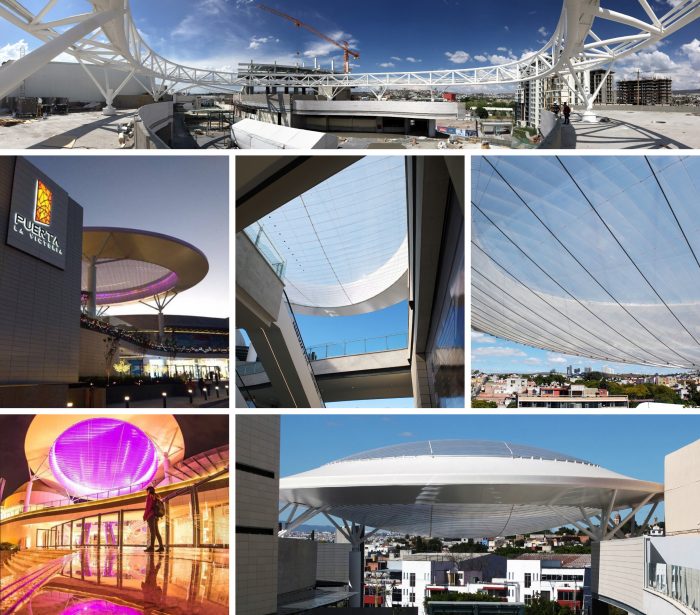


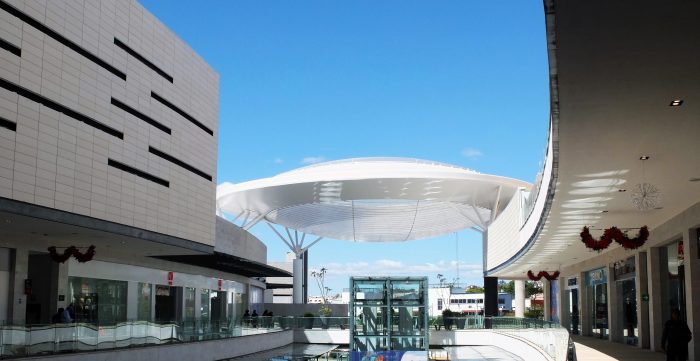
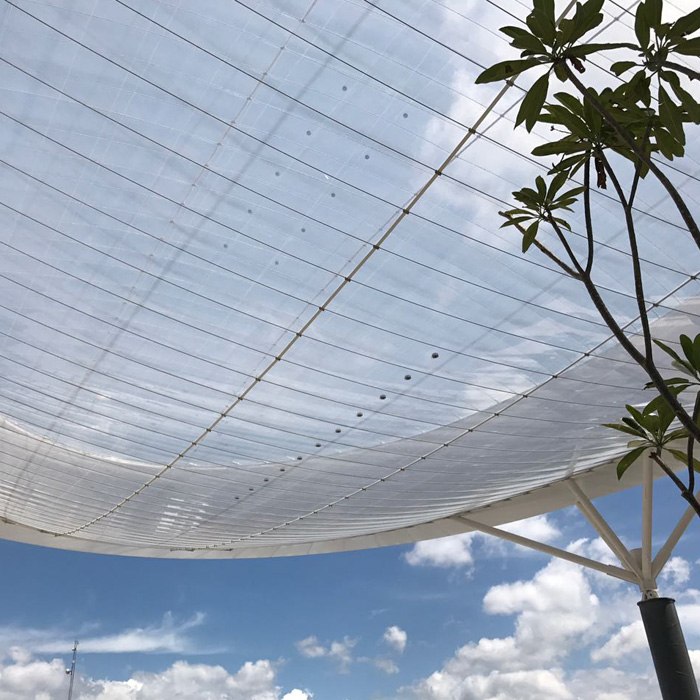
    Das ETFE-Dach der Shopping Mall „La Victoria“ in Queretaro, Mexiko, ist unser zweites Projekt zusammen mit Lonas Lorenzo.

    Für dieses Projekt haben wir einen ovalen Stahlring entworfen, der mit einer PCV / PES-Schicht bedeckt ist, um die Stahlstruktur zu verbergen. Der von der Stahlkonstruktion beschriebene große ovale Ring wurde mit einem ETFE-Material überzogen. Auf diese Weise haben wir ein großes ETFE-Kissen mit einer Länge von 30 m, einer Breite von 24 m und einer Höhe von 7,5 m entworfen, das derzeit das größte ETFE-Kissen in Amerika ist.

    Das große Volumen innerhalb des Stahlringes wird unter Druck gesetzt, um den äußeren ETFE-foil Form zu geben und die Struktur unter Spannung zu halten. Die Stahlringstruktur, die ca. 1.000 m² überdeckt, wird in 4 Punkten gehalten, was das Gefühl des Levitierens des Projektes ermöglicht.
  • Ingenieurkammner – Santiago, Chile (2007)

    Ingenieurkammner – Santiago, Chile (2007)

    Projektdaten

    Design: desmontables + z3rch
    Tragwerksplannung: z3rch
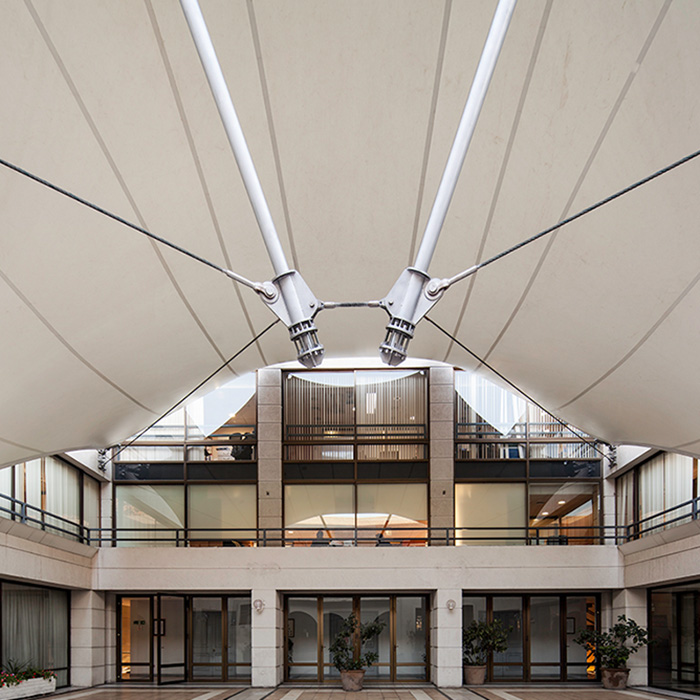
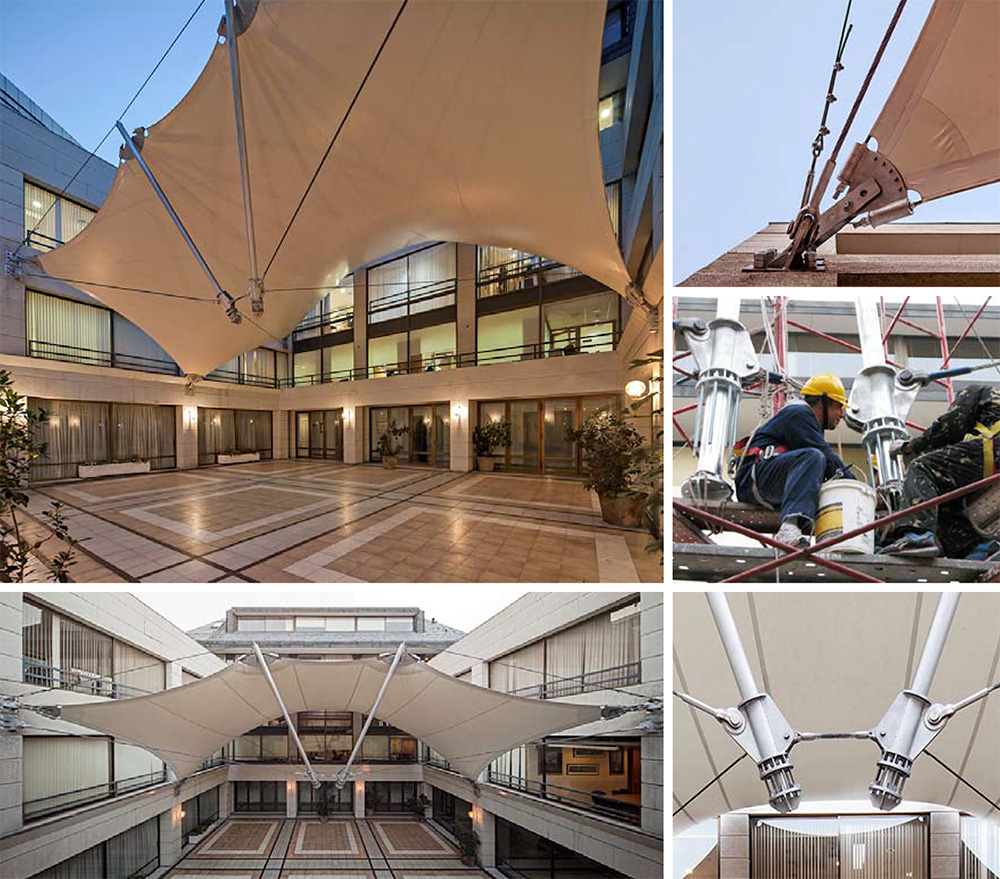
    Struktur: fliegende Maststruktur
    Material: PVC/PES Membrane, Stahl + Stahlkabel
    überbaute Fläche: 140 qm
    Fotos: desmontables + draft

  • Wandelgang Kloster Lehnin, Deutschland (2012)

    Wandelgang Kloster Lehnin, Deutschland (2012)

    Projektdaten

    Architekt: Ruge Architekten
    Ingengieur: z3rch
    Struktur: Tensigrity structure with loop cable
    Material: PVC/PES Membrane, Stahl + Stahlseile
    überdeckte Fläche: 55 qm
    Fotos: 3dtex + z3rch

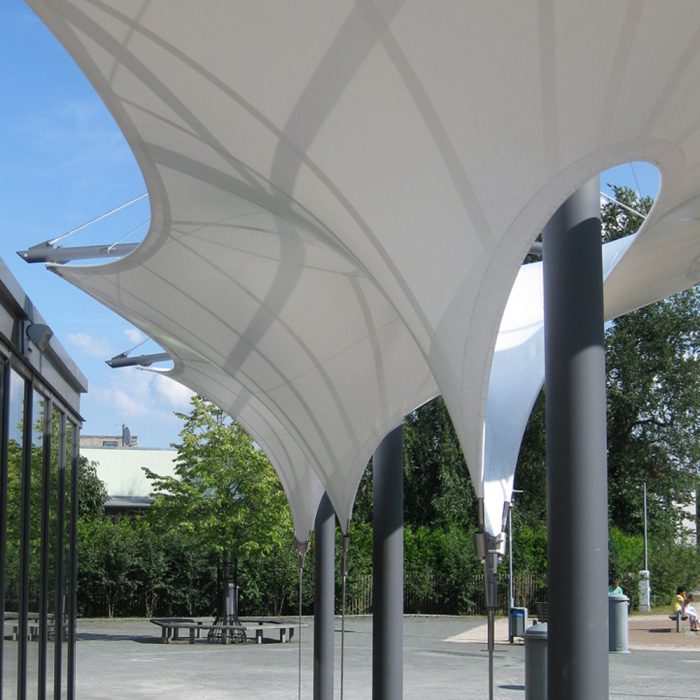
    The City Hall of Lehnin Monastery, near Berlin, was looking for a structure that would provide sun protection for a tourist information pavilion made entirely of glass. The designed structure is a tensegrity, ie, it is held only by the final membrane tension. The form finding process took an incredible amount of time to find for stability and center positioning of the masts. Using computational methods for “form finding” we could not reach the goal of centering the mast loop cable. Because of that, we turn to do physical models, to study the natural behavior of the form we were looking for. After studying these physical models we went back to computational models with experimental and tangible understanding of what we wanted to build. So we decided to build a perfectly vertical tension cable that allowed us to center the mast. With this design we also managed to decrease the diameter of the perforation of the membrane or loop cable achieving a greater covered area.

  • Hochschule Kopernikus – Frutillar, Chile (2015)

    Hochschule Kopernikus – Frutillar, Chile (2015)

    Projektdaten

    Design: Desmontables S.A.
    Ingeniuer: z3rch
    Struktur: Hypar
    Material: PVC/PES Membrane, Holz + Stahl
    überdeckte Fläche: 70 qm
    Fotos: Desmontables S.A.

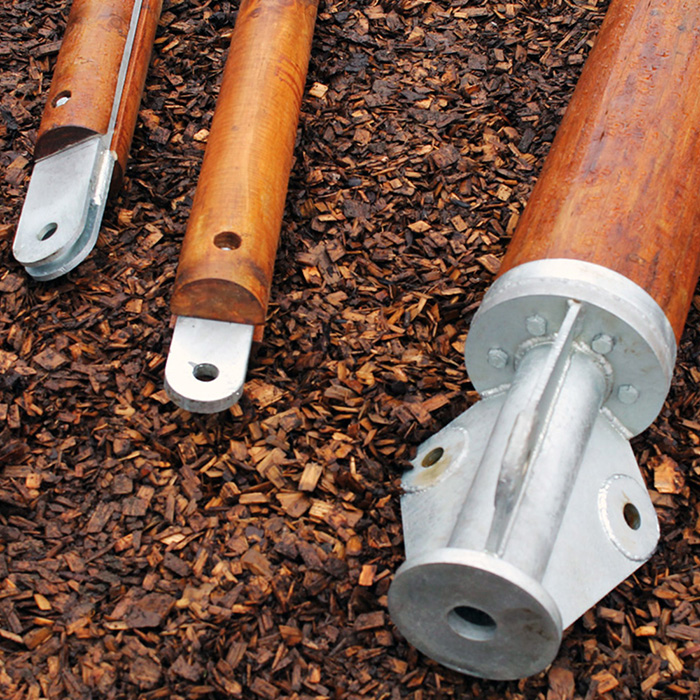
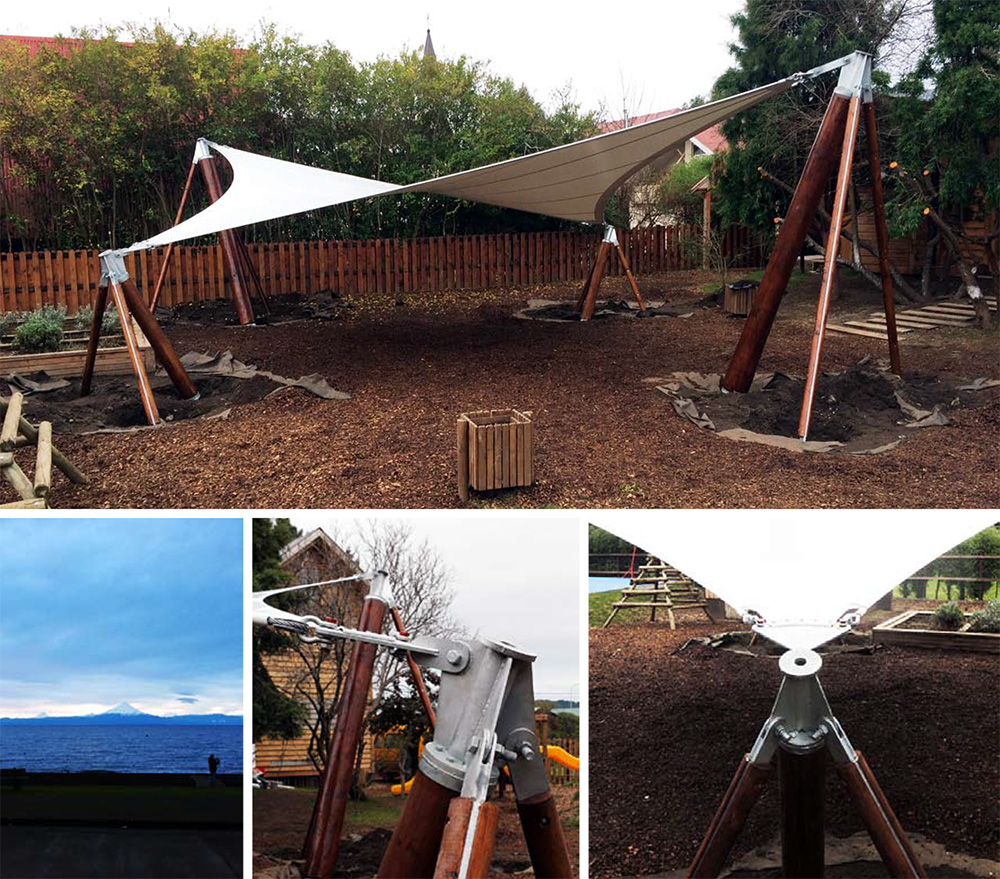
    This small but very powerfull sail is the covering for the kids playground of the Kopernikus School. The Kopernikus school is located in a small town in south Chile, next to the beatifull Llanquihue lake, Frutillar. Following the principles of the school of teaching respect, innovation and linkage to the surroundings is that this “simple saddle” was designed in conversation with the fully nature of the region. Massive wood mast under compresion and steel plates covered in wood as tie backs gives life to this beautifull rain and sun protection for the school kids. A project that ratify the beautifull combination of structural membranes and wood.

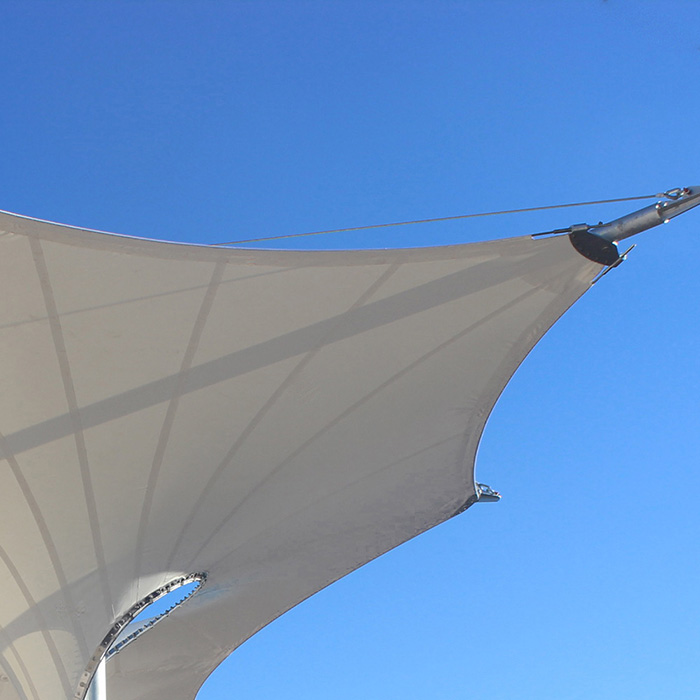
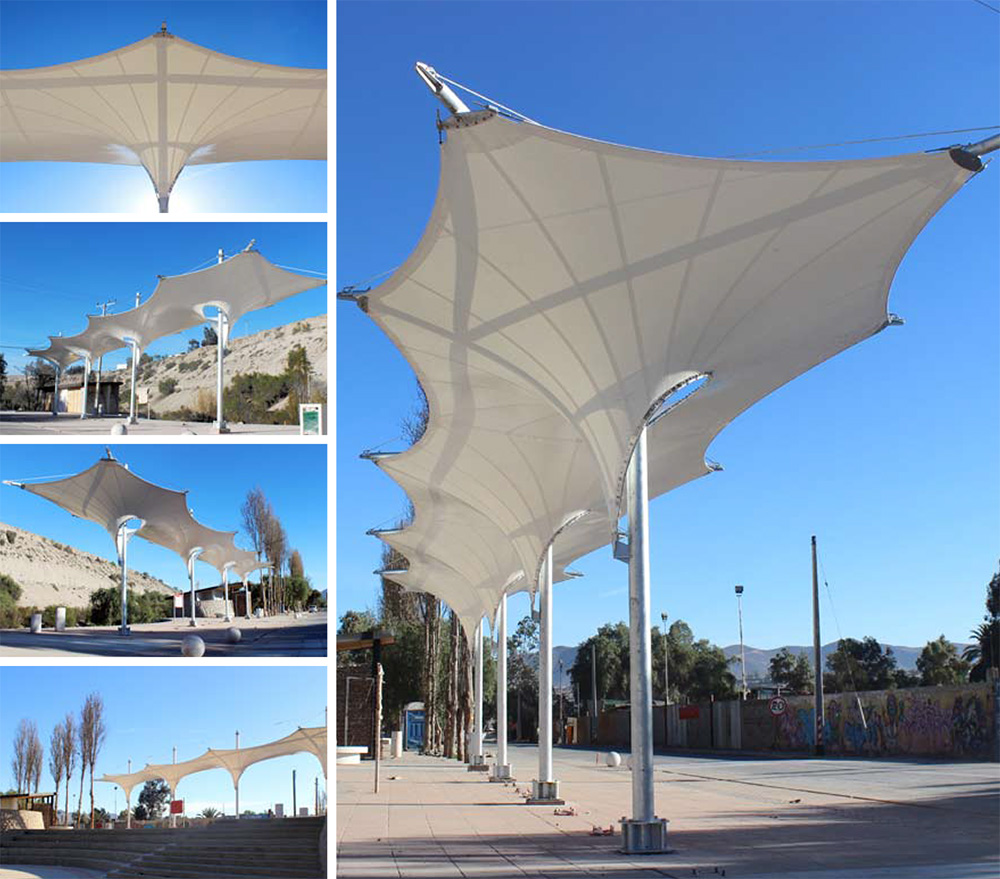
  • Promenade Vallenar, Chile (2015)

    Promenade Vallenar, Chile (2015)

    Projektdaten

    Design: SurFace
    Ingenieur: z3rch
    Strukture: Tensigrity structure with loop cable
    Material: PVC/PES Membrane, Stahl, Stahlseile
    überdeckte Fläche: 120 qm
    Fotos: surface

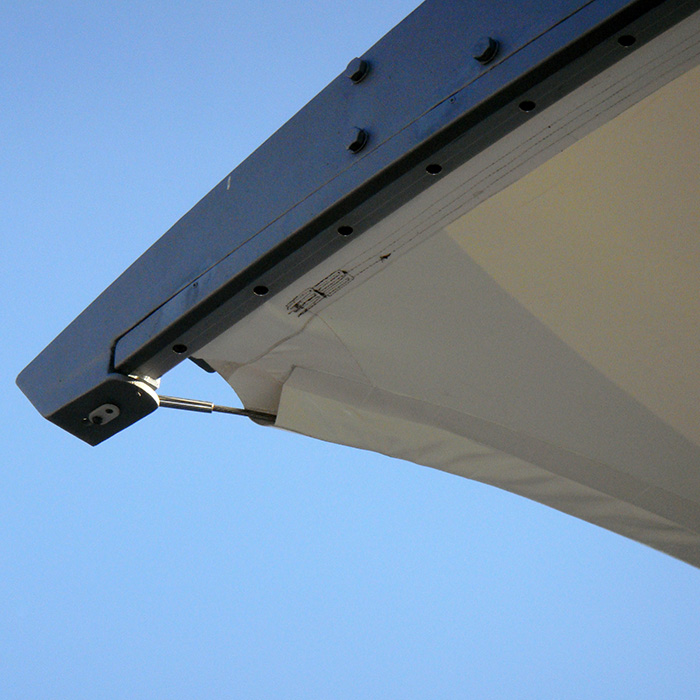
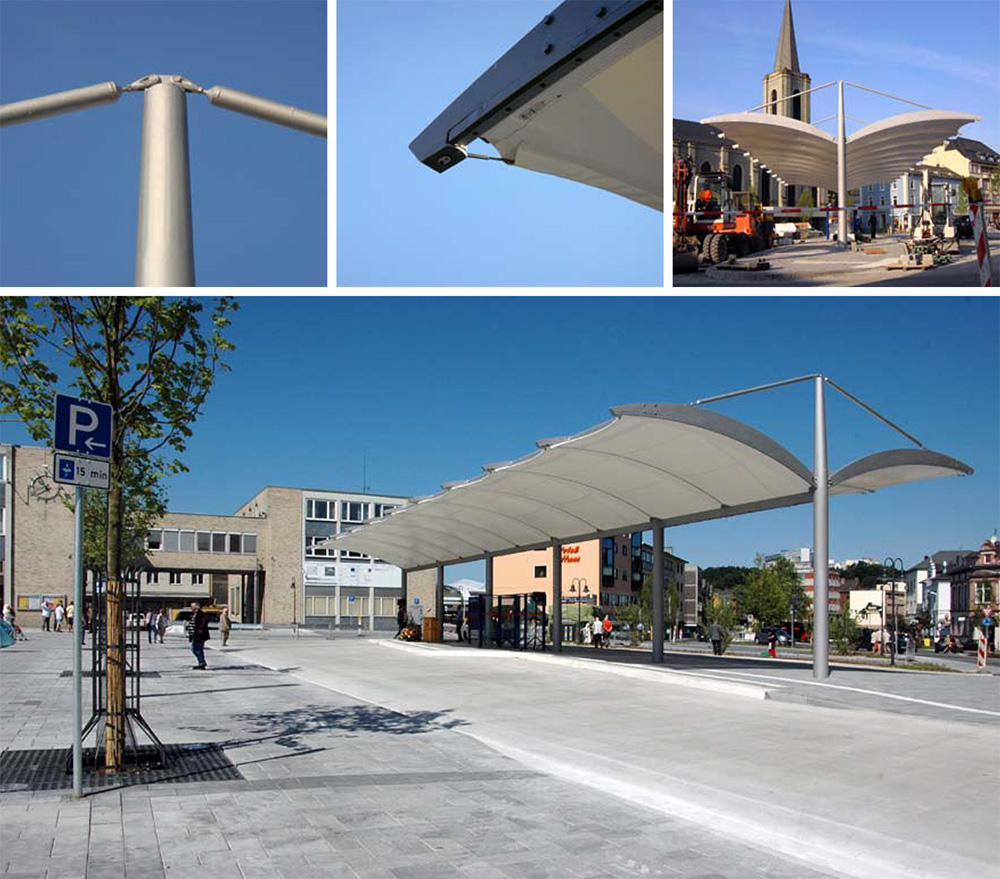
  • Busbahnhof Limburg an der Lahn, Deutschland (2008)

    Busbahnhof Limburg an der Lahn, Deutschland (2008)

    Projektdaten/h4>
    Architekt: Stadt Land Bahn SLB
    Ingenieur: form-TL
    Struktur: gespannt Membrane
    Material: PVC/PES Membrane, Stahl + Stahlseile
    überdeckte Fläche: 330 sqm
    Fotos: form-TL, Stadt Limburg