Kategorie: Estructura tensada

  • Free the Air: part of Tomás Saraceno’s Particular Matter(s), Nueva York (2022)

    Free the Air: part of Tomás Saraceno’s Particular Matter(s), Nueva York (2022)

    Datos Proyecto

    Artista: Tomás Saraceno
    Cliente: 3DTex
    Ubicación: The Shed, NY
    Estructura: instalación multisensorial compuesta por dos mallas de acero transitables, estructura de acero y un gran globo neumático
    Material: Acero, malla de acero inoxidable X-Tend, Aluminio, Membrana recubierta y hermética al helio.
    Area cubierta: 700 m²
    Volumen esfera: 14.130 m³
    Fotos: © Tomás Saraceno, 3DTex, z3rch

    Z3RCH:
    Diseño conceptual: Diseño conceptual para una escultura de 30 metros de diámetro que alberga un concierto de telarañas en cuatro movimientos.
    Búsqueda de forma: Balloon + malla transitable X-Tend Mesh
    Diseño estático: Acero, malla de acero inoxidable X-Tend, Aluminio, Membrana, Cables de acero
    Diseño de detalles: Acero + Membrana + malla de acero inoxidable X-Tend + Cables de acero + extrusión de aluminio
    Planos de fabricación: Patronaje de membrana
    En terreno: Supervisión de construcción e inflado de la superficie neumática.
     

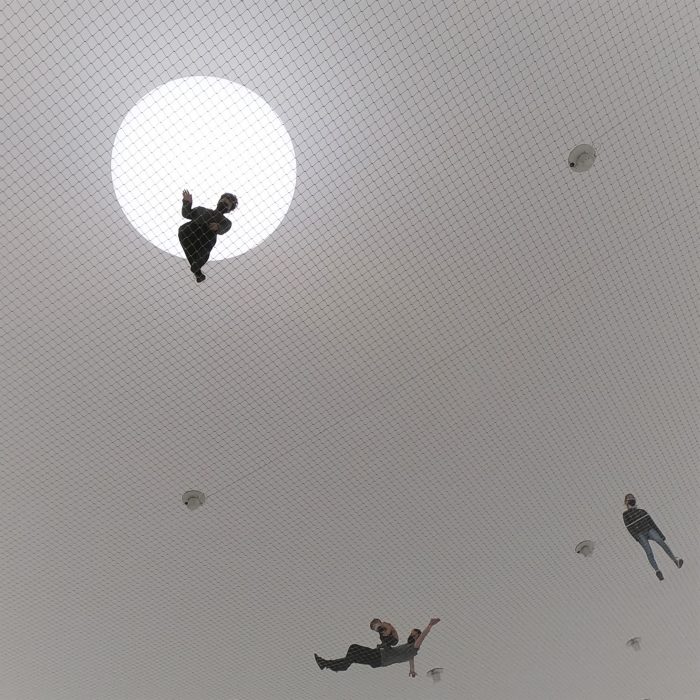
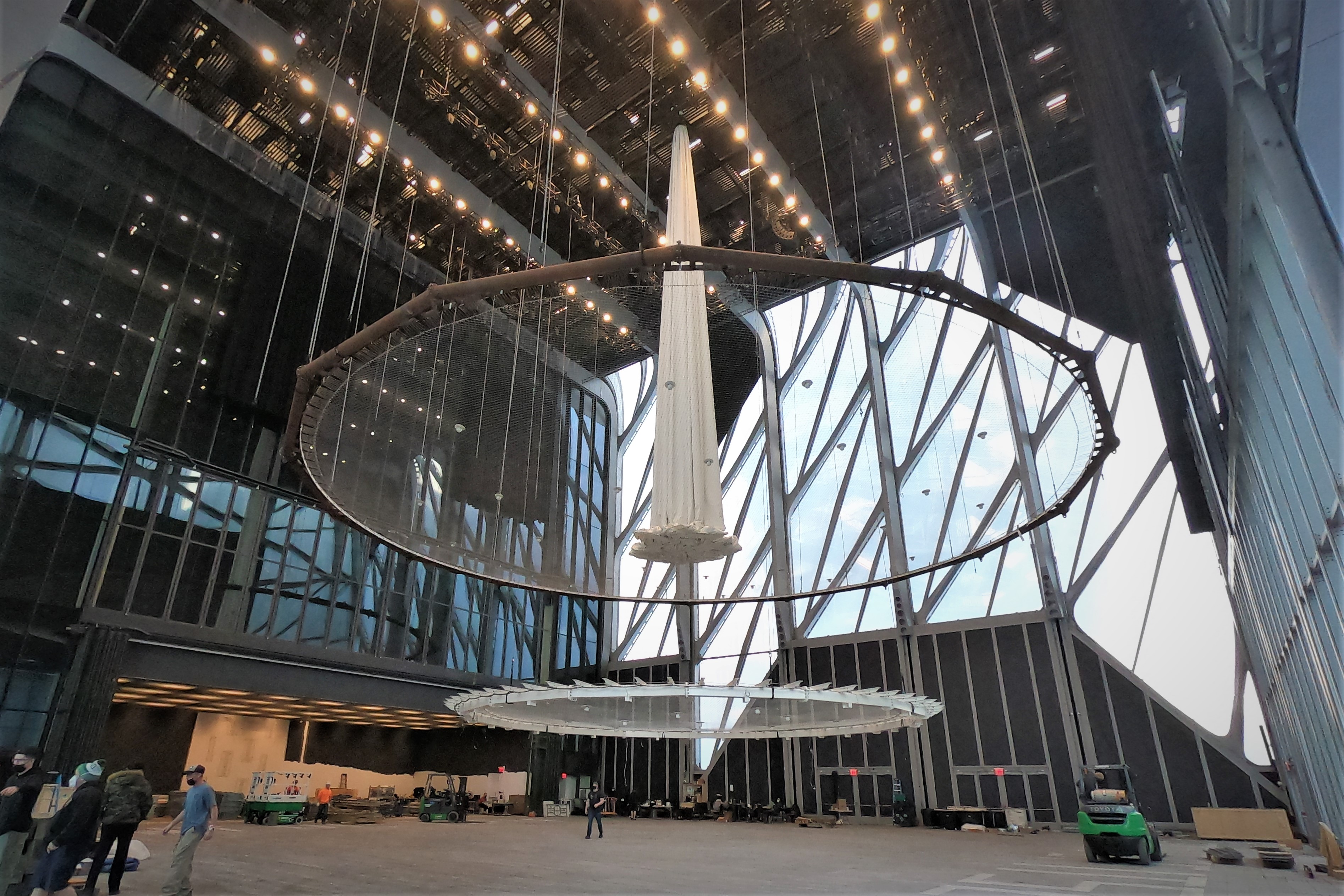
    Tomás Saraceno: Particular Matter(s) en el centro cultural The Shed, se centra en una instalación multi sensorial más grande que la vida, esta consta de dos mallas metálicas, una de 29 metros de diámetro y otra de 12 metros. Una está suspendida a doce metros en el aire y domina una red inferior a 6 metros sobre el suelo. Los participantes ingresan a un espacio cavernoso y blanco que está nublado y poco iluminado. Uno camina a través de las redes gigantes y ligeramente aterradoras, ya sea mirando hacia arriba a los de arriba o mirando hacia abajo a los demás, encontrando torpemente un lugar para acostarse y acomodarse para un concierto. La cantidad de cuerpos permitidos a la vez en cada nivel se controla cuidadosamente para garantizar la seguridad de los visitantes y, al mismo tiempo, permitir que haya suficiente espacio para esparcirse. (text by: daily art magazine)
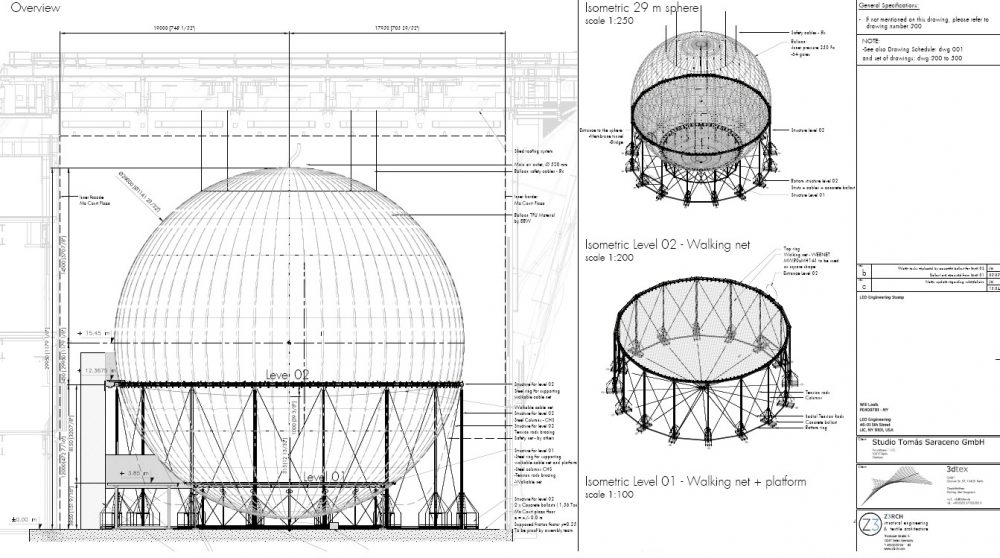
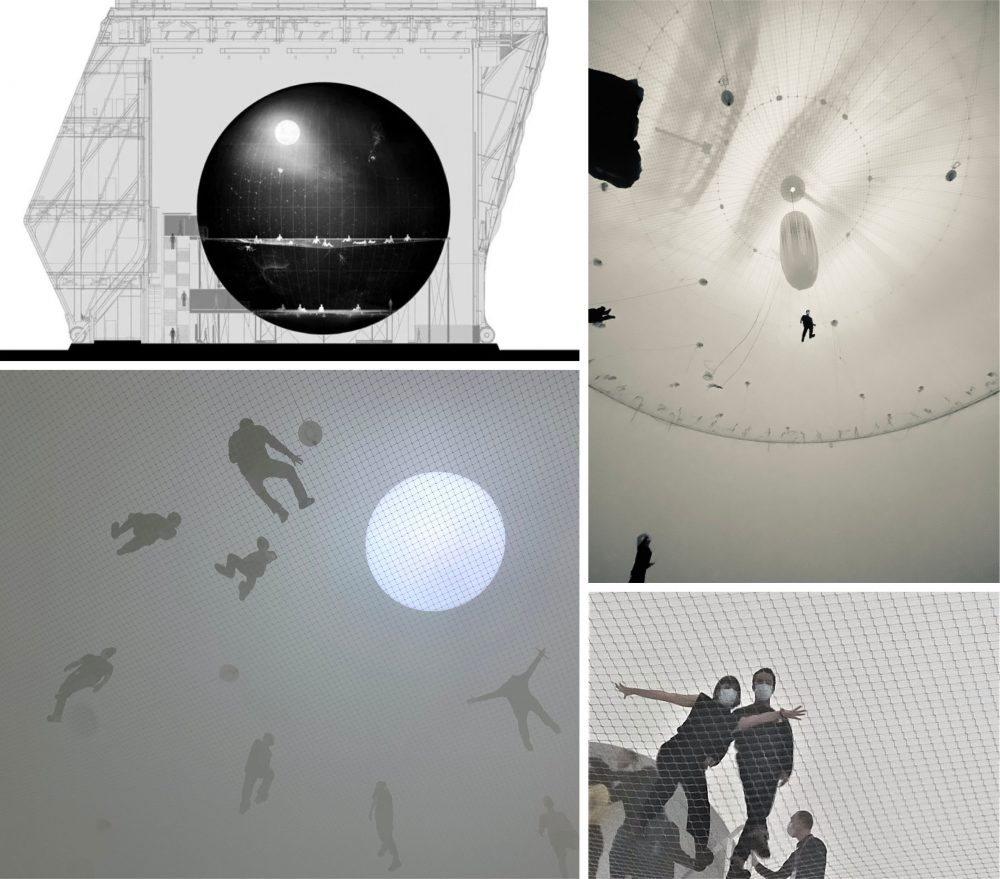
    El nuevo centro cultural de Nueva York, The Shed, recibirá en invierno de 2022 al artista Tomás Saraceno con su primera exposición individual en Nueva York, Particular Matter(s). Junto con Studio Saraceno, 3dtex y Balloon Bau Wörner hemos desarrollado una escultura de 29 m de diámetro que se colocará dentro del Mc Court.

    La exposición Free the Air es una experiencia sensorial a gran escala en la que los visitantes perciben un concierto de vibraciones derivadas del movimiento de partículas a través del aire y cómo las arañas transmiten información a través de mecanismos vibratorios. En el nivel superior, los visitantes se aventuran en un piso flotante similar a una red a 40 pies sobre el suelo. En Free the Air, el cuerpo se convierte en un oído, perceptivo a la red que resuena debajo de él y a los ritmos de otras especies. (texto: The Shed)

    El globo es una esfera de 29 m hecha de una membrana impermeable al helio que se  inflará a través de un ventilador. Dentro del globo encontrarás dos redes para caminar hechas de cables de acero inoxidable. Ambas estructuras estarán fijadas a través de una estructura exterior de acero que estará lastrada con tanques de agua al suelo. Toda la estructura se instalará en solo dos semanas y brindará una experiencia increíble a los visitantes y marcará un hito en los proyectos de grandes dimensiones del Studio Saraceno.

    Ubicacion: The Shed, NY
  • Colegio de ingenieros – Santiago, Chile (2007)

    Colegio de ingenieros – Santiago, Chile (2007)

    Project data

    Design: desmontables + z3rch
    Engineer: z3rch
    Structure: Flying mast structure
    Material: PVC/PES membrane, steel + steel cables
    Covered Area: 140 sqm
    photos: desmontables + draft

  • Ecor – Schio, Italia (2010)

    Ecor – Schio, Italia (2010)

    h4>Project data

    Architect: Benetti &amp, Lovato
    Engineering: form-TL
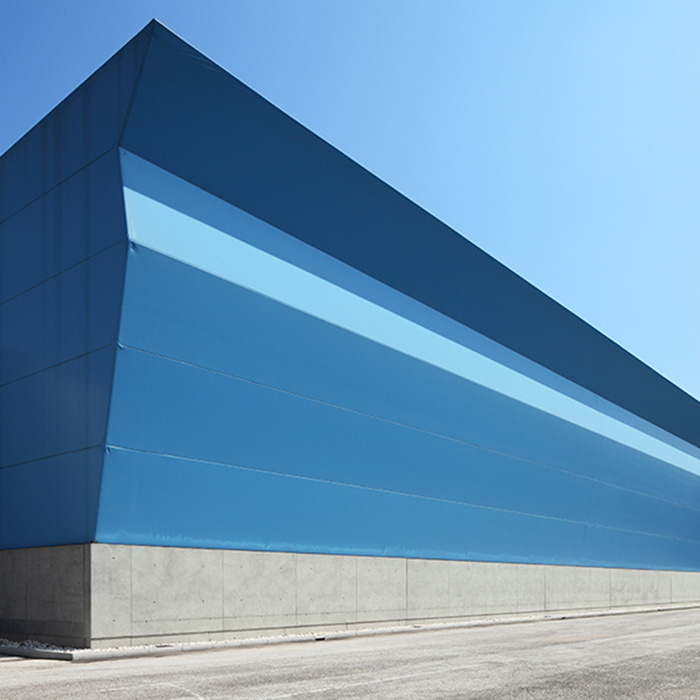
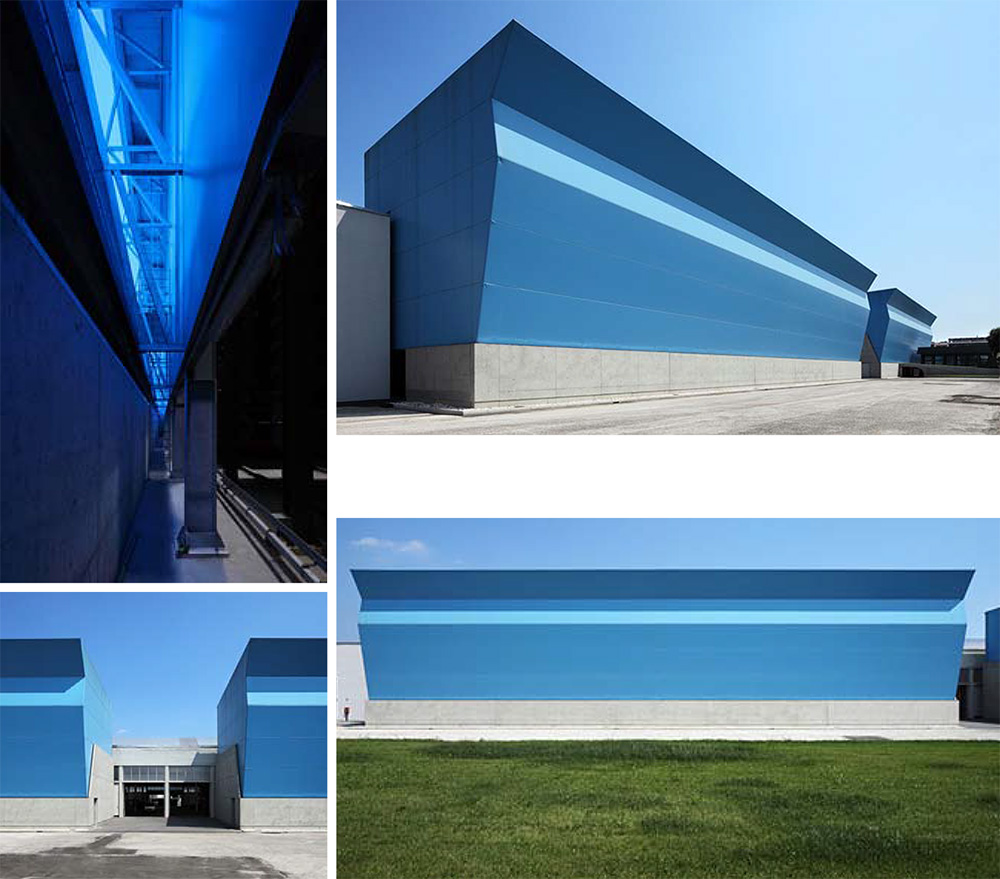
    Structure: Tensile facade
    Material: Silicon glas membrane + aluminium porfiles
    Covered Area: 900 sqm + 980 sqm
    photos: Cristian Guizzo

  • Monasterio Lehnin, Alemania (2012)

    Monasterio Lehnin, Alemania (2012)

    Project data

    Architect: Ruge Architekten
    Engineering: z3rch
    Structure: Tensigrity structure with loop cable
    Material: PVC/PES membrane, steel + steel cables
    Covered Area: 55 sqm
    photos: 3dtex, z3rch

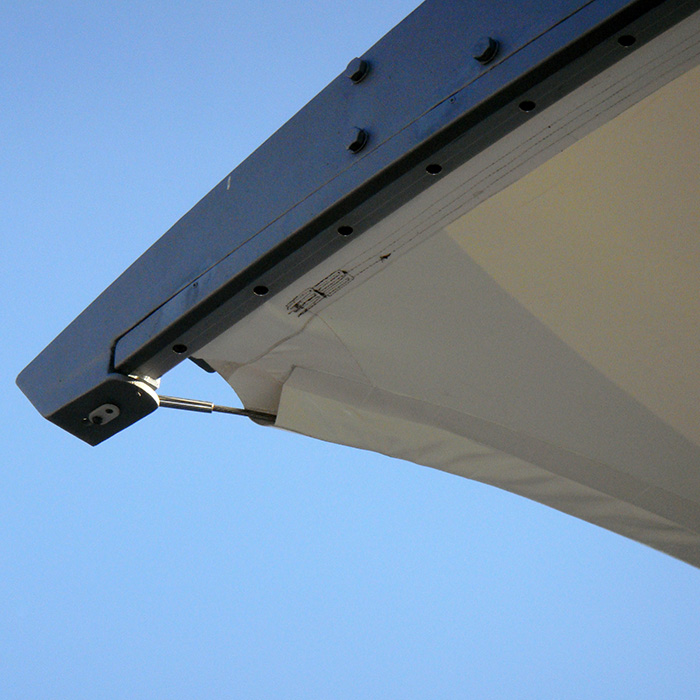
    The City Hall of Monastery Lehnin, near Berlin, was looking for a structure that would provide sun protection for a tourist information pavilion made entirely of glass. The designed structure is a tensegrity, ie, it is held only by the final membrane tension. The form finding process took an incredible amount of time to find for stability and center positioning of the masts. Using computational methods for “form finding” we could not reach the goal of centering the mast loop cable. Because of that, we turn to do physical models, to study the natural behavior of the form we were looking for. After studying these physical models we went back to computational models with experimental and tangible understanding of what we wanted to build. So we decided to build a perfectly vertical tension cable that allowed us to center the mast. With this design we also managed to decrease the diameter of the perforation of the membrane or loop cable achieving a greater covered area.

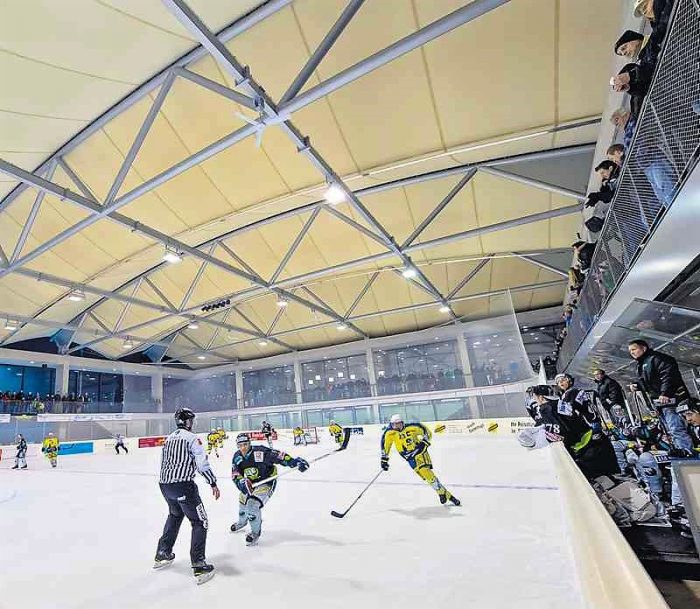
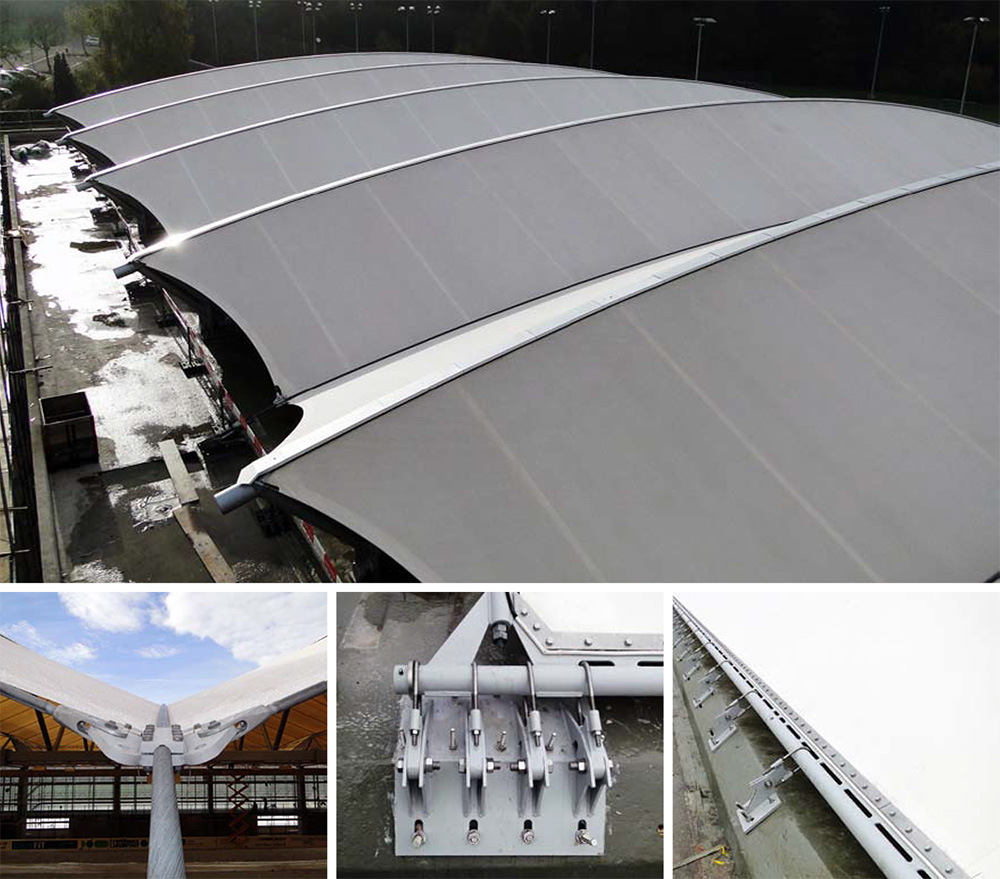
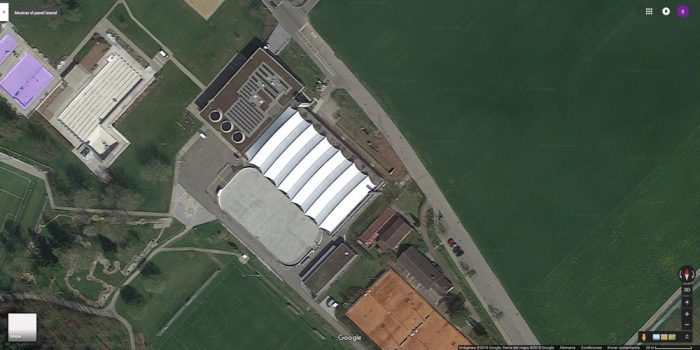
  • Pista de hielo Effretikon, Suiza (2013)

    Pista de hielo Effretikon, Suiza (2013)

    Project data

    Engineering: studio briegert + z3rch
    Structure: Ridge and valley cable structure
    Material: PTFE glass membrane, steel + steel cables
    Covered Area: 900 sqm
    photos: HPGasser


  • Colegio Kopernikus – Frutillar, Chile (2015)

    Colegio Kopernikus – Frutillar, Chile (2015)

    Project data

    Design: Desmontables S.A.
    Engineering: z3rch
    Structure: Hypar
    Material: PVC/PES membrane, wood + steel
    Covered Area: 70 sqm
    photos: Desmontables S.A.

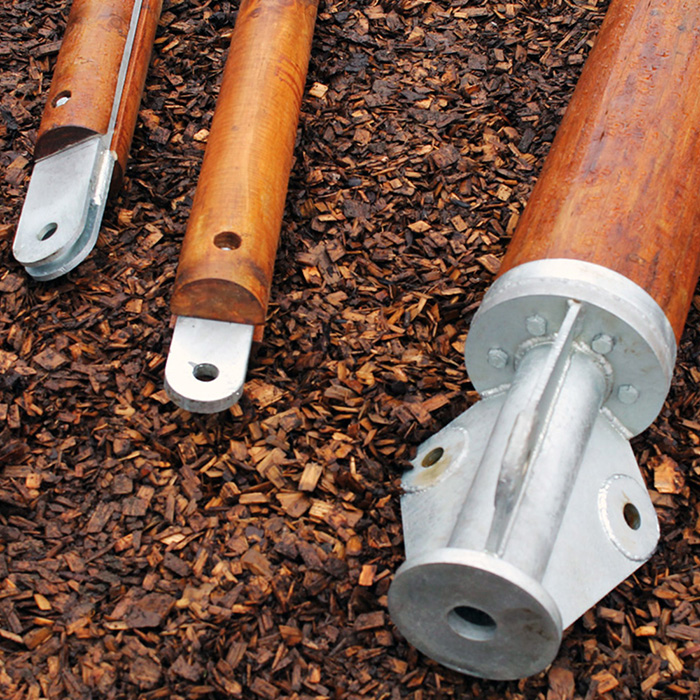
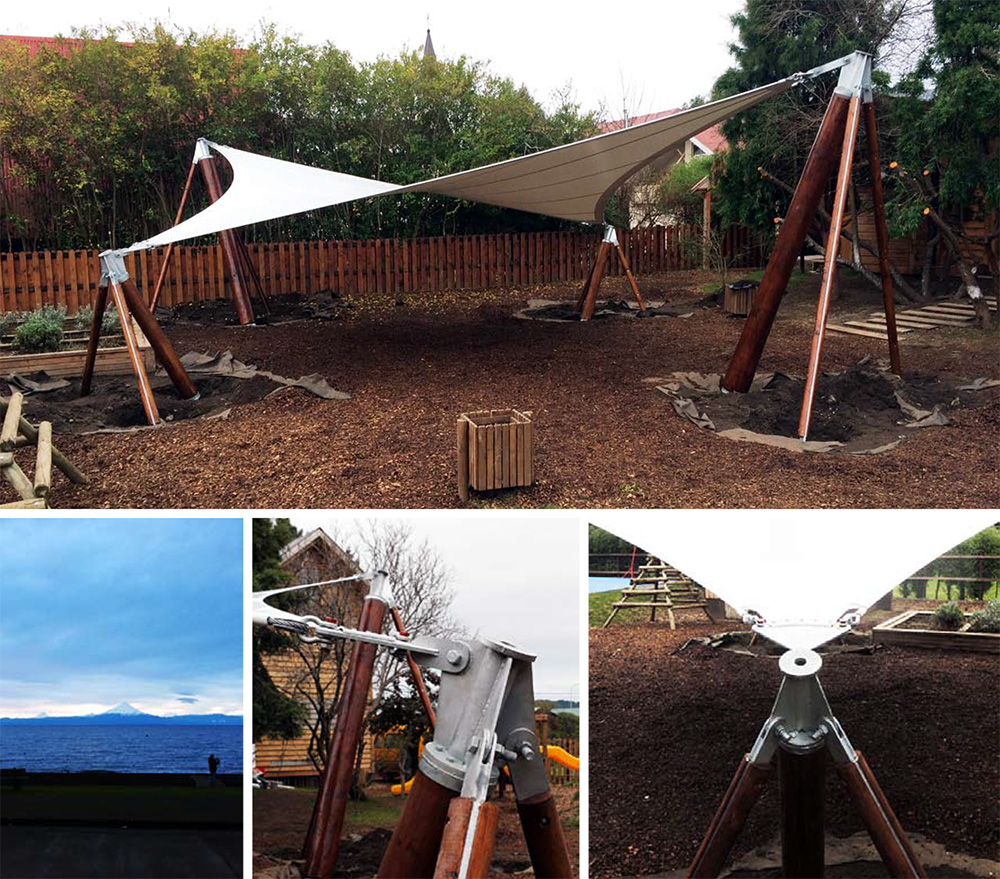
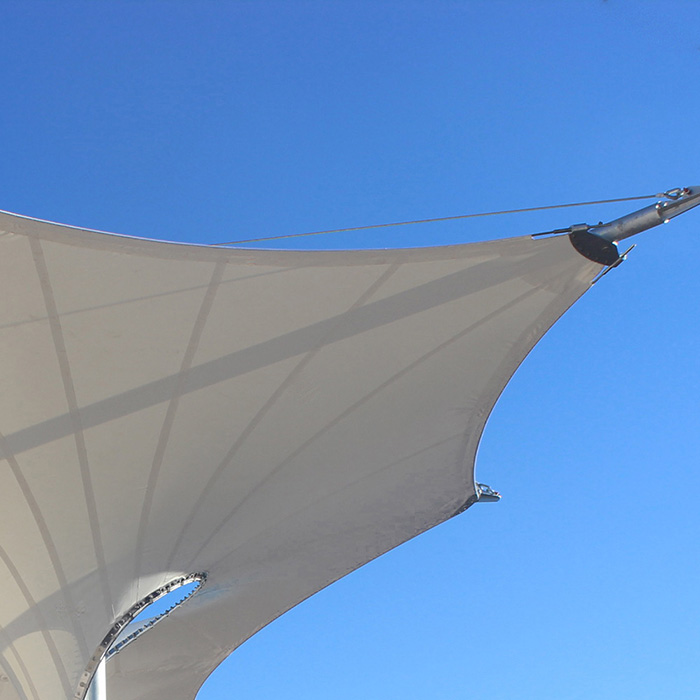
    This small but very powerfull sail is the covering for the kids playground of the Kopernikus School. The Kopernikus school is located in a small town in south Chile, next to the beatifull Llanquihue lake, Frutillar. Following the principles of the school of teaching respect, innovation and linkage to the surroundings is that this “simple saddle” was designed in conversation with the fully nature of the region. Massive wood mast under compresion and steel plates covered in wood as tie backs gives life to this beautifull rain and sun protection for the school kids. A project that ratify the beautifull combination of structural membranes and wood.

  • YAP_Constructo 9, Santiago de Chile 2019

    YAP_Constructo 9, Santiago de Chile 2019

    Datos Proyecto

    Arquitecto: GA Estudio
    Competición: YAP Constructo 9 – Chile
    Z3RCH: Asesoria del Concepto Estructural
    Estructura: Cojín de Agua / Aire reforzado con cables de acero y pilares
    Área cubierta: ca. 200 m2
    Fotos: GA Estudio

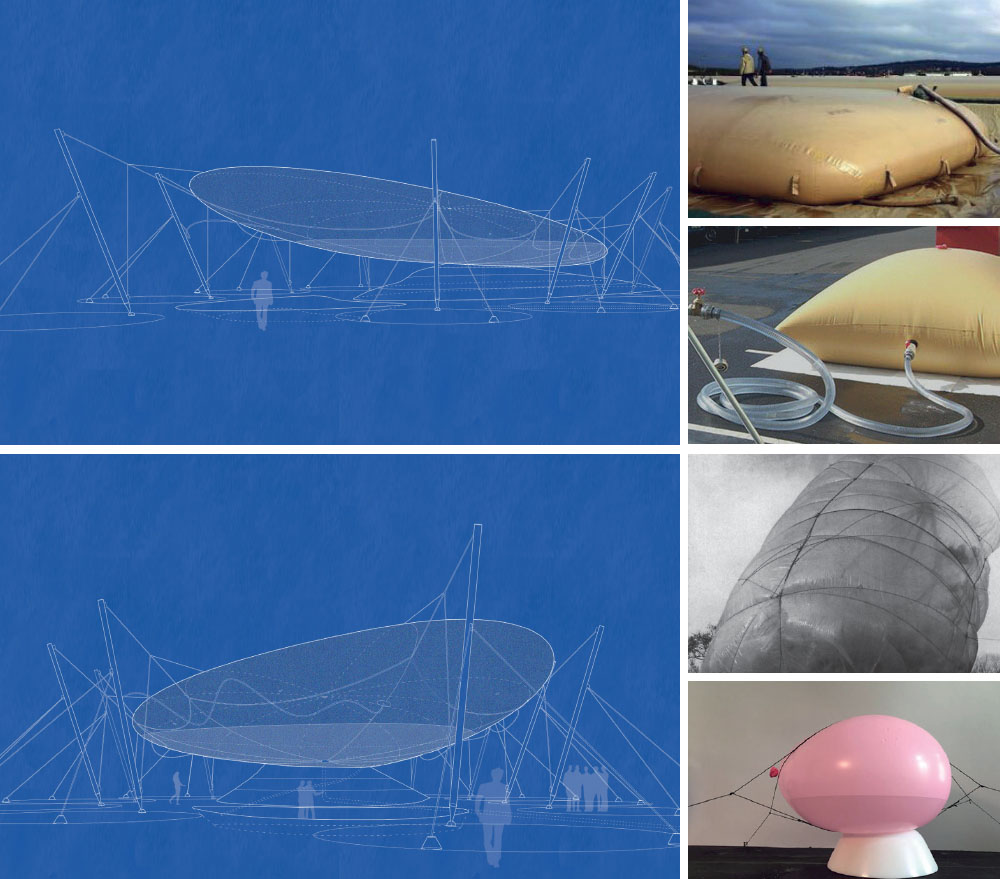
    Este proyecto explora las posibilidades arquitectónicas de una cisterna (estanque) de agua flexible: elemento industrial que le da  forma al problema del agua hoy en día, sus posibilidades de acopio, retención, fácil movilización y cuidado.
    Nos hemos propuesto levantar una cisterna de agua flexible, un estanque que con ligeros ajustes lo transformaremos en cubierta,  mezclando aire y agua. 25% de agua 75% de aire soportados gracias a una estructura colaborativa entre un montículo de tierra compactada (estático) y otro de tensegridad (flexible) donde elementos sometidos a la tracción y a la compresión amarran todo el  sistema. El peso del agua activa todos los elementos estructurales. Como peso muerto, la cisterna se acuesta sobre una “cama” ,  “red” o “camisa” que conecta con los pilares perimetrales. Este peso se transforma en una tensión superficial en la “cama” la cual  es derivada como tracción a los cables y compresión a los pilares perimetrales formando un flujo continuo de energía que queda  cerrado dentro del sistema estructural.

    Texto del concurso por GA Estudio

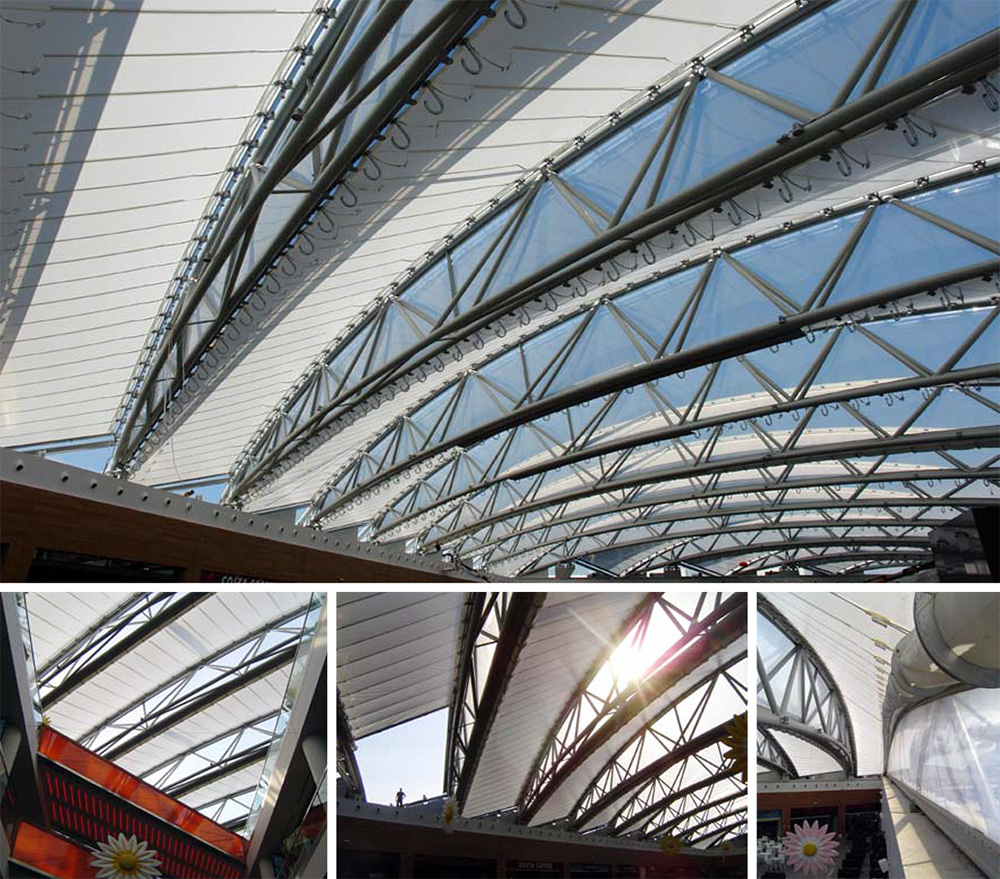
  • Piraeus Centro comercial – Atenas, Grecia (2009)

    Piraeus Centro comercial – Atenas, Grecia (2009)

    Project data

    Architect: Conran & Partners, London + Diarchon, Athen
    Engineering: form-TL
    Structure: Retractable roof + ETFE cushions
    Material: Silicon fiber glas membrane, ETFE, steel + steel cables
    Covered Area: 3.400 sqm
    photos: form-TL


  • Ribereño Vallenar, Chile (2015)

    Ribereño Vallenar, Chile (2015)

    Project data

    Design: SurFace
    Engineering: z3rch
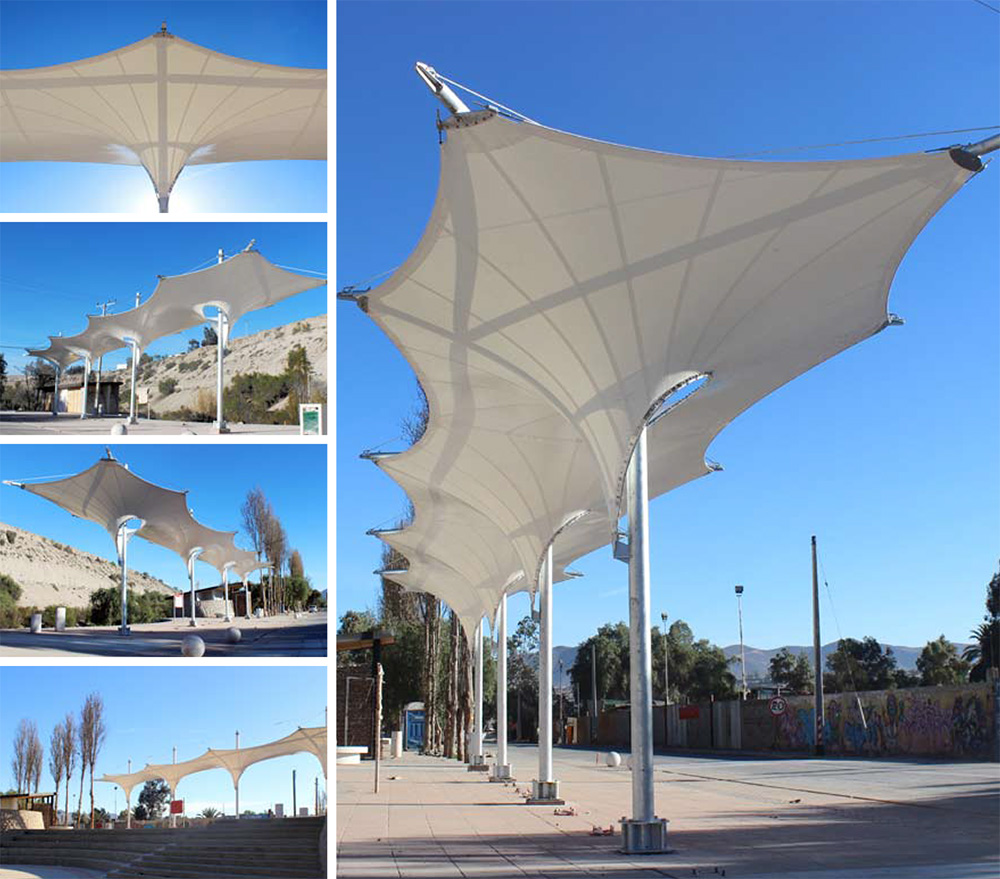
    Structure: Tensigrity structure with loop cable
    Material: PVC/PES membrane, steel + steel cables
    Covered Area: 120 sqm
    photos: surface

  • Estación de buses Limburg an der Lahn, Alemania (2008)

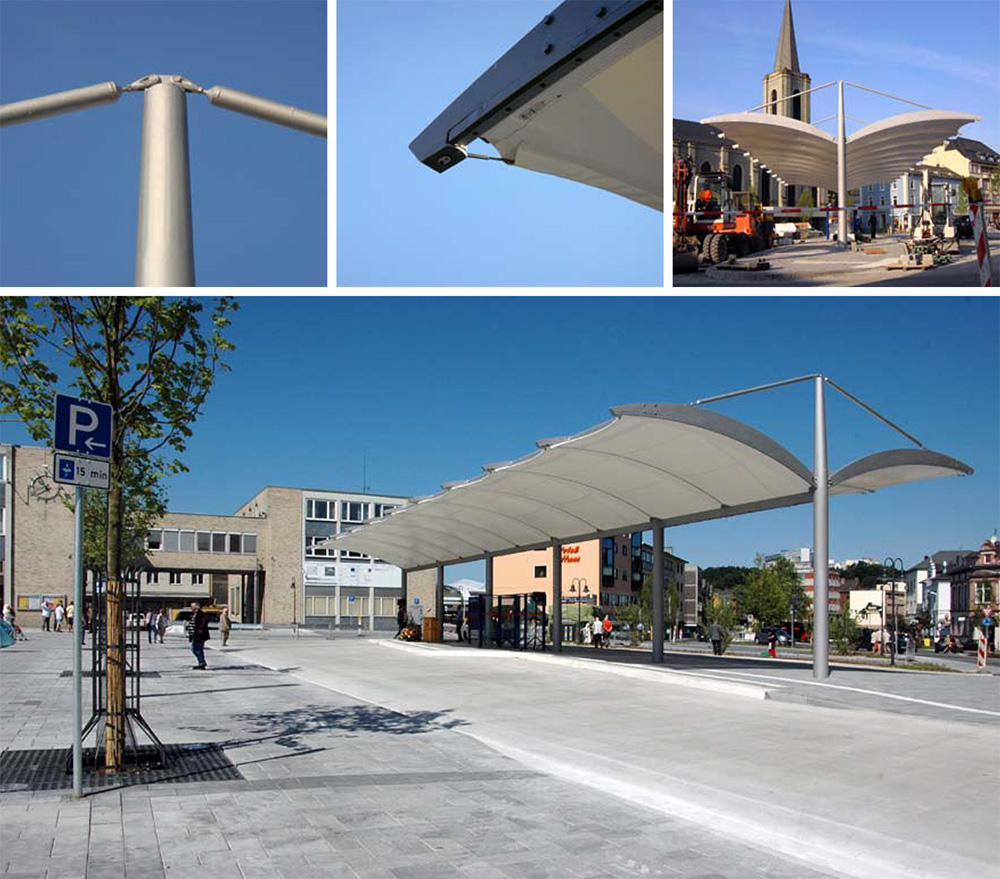
    Estación de buses Limburg an der Lahn, Alemania (2008)

    Project data

    Architect: Stadt Land Bahn SLB
    Engineering: form-TL
    Structure: Tensioned membrane
    Material: PVC/PES membrane, steel + steel cables
    Covered Area: 330 sqm
    photos: form-TL, Stadt Limburg

  • El Refugio – Winnipeg, Canadá (2010)

    El Refugio – Winnipeg, Canadá (2010)

    Project data

    Architect: Lancelot Coar
    Engineer: z3rch
    Structure: Tensile framework for ice layer
    Material: Stretch fabric, fiber galss rebars GFRP + water
    Covered Area: 45 sqm
    photos: Lancelot Coar

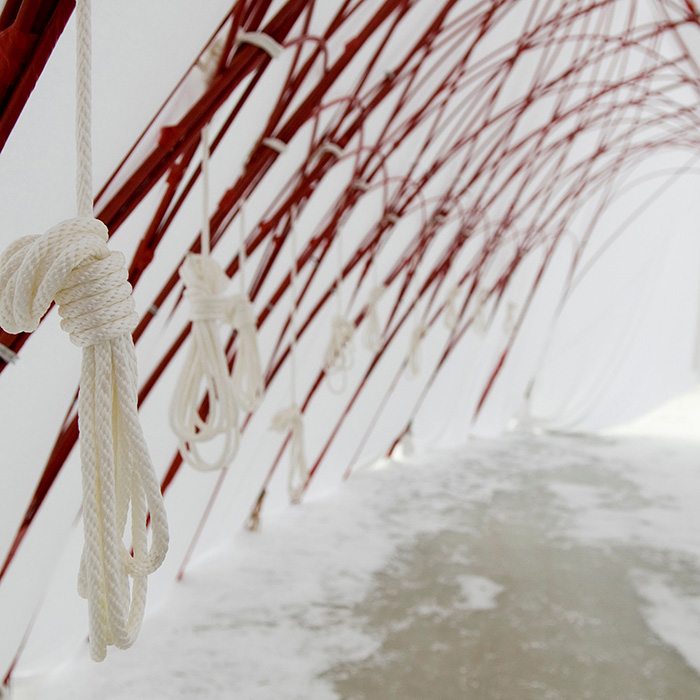
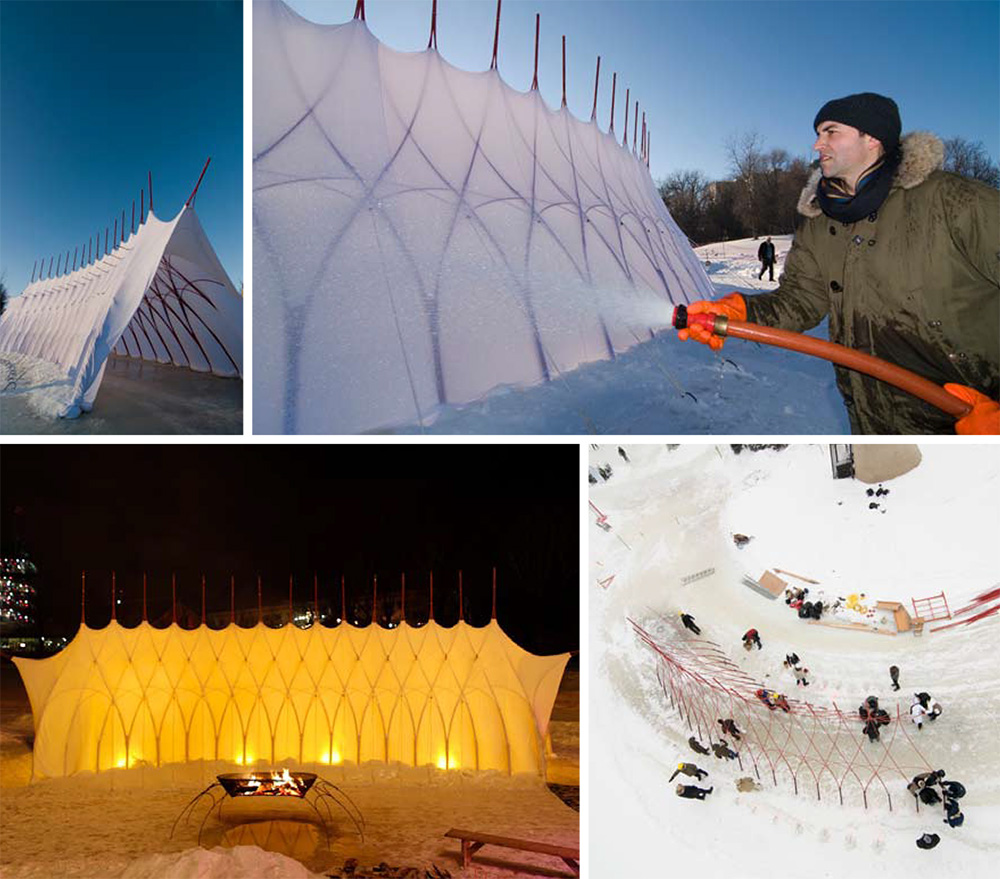
    In January of 2012, The Department of Architecture at the University of Manitoba was invited to design and construct a project for the frozen river trail on the Assiniboine and Rivers in Winnipeg, Manitoba. The proposal was to create a structure that would speak to the temporary nature of the site conditions, as well as celebrate and test how the extreme nature of the cold climate might inform a building system that relies on it. As a result a project was proposed to build a fiberglass rebar structure that would support and shape a fabric formed ice skin. Profesor Coar build this experimental “thin shell construction” using the fabric as a formwork for an ice layer. In order to help profesor Coar to determine some site condition we made some analysis and modelling of the rebar structure, membrane and ice layer. In this way we could calculate the fiber glas rebars and determine the load for the anchoring as well as the ice layer thisckness. Although this project was a study of the performance of ice as a rigid compressive material, it was also a study of the construction techniques used to form other phasechanging construction materials.